Opinion: The Battle Behind Every Headline

America feels like it’s at a breaking point. Every tragedy, every headline, is no longer just about what happened — it’s about which side you’re on, and how grief, instead of echoing resilience in the face of hardship, now echoes our divisions.
In 2013, when bombs exploded at the Boston Marathon, New England was shaken to its core. Yet in the face of terror, something remarkable happened. Unity filled the streets as neighbors helped neighbors, first responders ran toward danger, and strangers became family. For a time, Boston and the nation stood together, defined not by division, but by resilience.
The following year, in Ferguson, the police killing of Michael Brown sparked protests that spread across the country. For some, it revealed long-ignored truths about injustice. For others, it felt like an attack on law enforcement itself. The seeds of division that would later deepen in 2020 were already taking root on both sides.
In the years that followed, new flashpoints kept widening the divide. The Charleston church shooting in 2015 forced painful conversations about race and hate. Charlottesville in 2017 showed how emboldened extremism had become. Parkland in 2018 brought young voices into the center of the gun debate. Each tragedy offered a chance for unity, but too often left behind deeper fractures.
The death of George Floyd in 2020 became a turning point for the nation. For many, it exposed deep inequalities and the urgent need for reform. For others, the protests that followed felt less like calls for justice and more like an attack on our nation itself. In New England, those divides shape not only how we see police, but how we see each other, and what kind of future we are building together.
That same summer, riots scarred communities across the country. Some saw them as destruction that deepened wounds. Others saw them as the visible pain of voices that had long gone unheard. Soon after, the pandemic years brought their own bitter weight. COVID left nearly everyone, regardless of side, mistrustful and exhausted. Arguments over masks, vaccines, and shutdowns turned public health into a political weapon.
On January 6th, 2021, the storming of the Capitol shocked the nation and shook faith in our institutions. To some, it was proof that democracy itself was under attack. To others, it was seen as the boiling over of frustration and mistrust in government. What could have been a moment for reflection, a chance to address the deep fractures on both sides, instead became another point of contention.
In 2023, when a gunman opened fire in Lewiston, horror rippled across New England and the nation. Families shattered. Communities mourning. Neighbors shoulder to shoulder at vigils. For a moment, sorrow was shared. But before the candles cooled, the conversation shifted. Sorrow gave way to politics, and politics to blame. Instead of uniting in grief, the aftermath became another political battle.
That same year, wars in Ukraine and Israel reached into American life. Instead of thoughtful debate, they fueled shouting matches on cable news, protests and counter-protests on campuses, and heated arguments spilling into town halls, workplaces, even family dinners.
Most recently, the assassination of conservative activist Charlie Kirk deepened fears of radical political violence. A family grieved, supporters mourned. Yet the loss was quickly swallowed up by partisan arguments, rather than the pause for compassion such a moment should demand.
Meanwhile, immigration and deportation have continued to stoke contention. For some, enforcement is a matter of order and safety. For others, it’s families broken apart, lives uprooted overnight. In cities like Boston, where immigrant communities are part of the fabric of daily life, those two truths often collide, leaving neighbors staring at the same street from different worlds.
Here in New England, we know division is nothing new. Boston has lived through revolution, through desegregation battles, through fights over civil rights and justice. We’ve seen what happens when communities fracture, and we’ve seen the painful work it takes to stitch them back together. History keeps reminding us: fracture is costly, unity is hard, and polarization never heals wounds.
The truth is stark: division doesn’t protect families, honor the dead, bring peace abroad, or strengthen our towns and cities. Division only weakens the fragile ties holding us together.
Boston and New England have always stood at the center of America’s great conflicts and great changes. The question is whether we’ll let today’s divides continue to tear us apart - or prove once again that New England can help the nation come together in unity.
Written by
What's Next?

Shark Activity Prompts Beach Closures in Plymouth
Plymouth, MA – Two popular beaches in Plymouth have been temporarily closed to swimmers after officials confirmed a shark-seal predation near Manomet Point on Saturday. Authorities announced that both White Horse Beach and Long Beach are under a Red Flag warning, meaning all swimming is prohibited until further notice. The decision comes after evidence of shark activity was confirmed off the coastline, reinforcing ongoing safety protocols designed to protect beachgoers. “Due to the confirmed n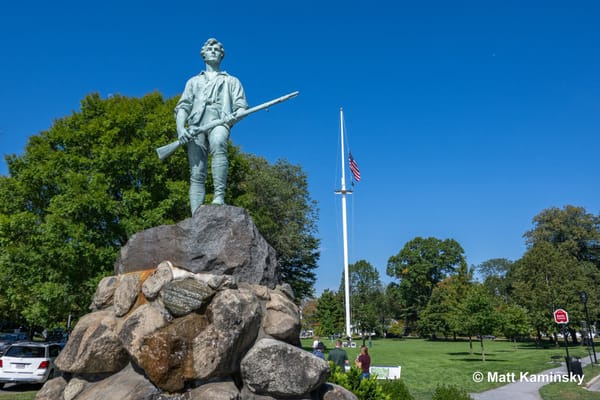
Vandalism Reported at Lexington Battle Green Flagpole
Lexington, MA – Police are investigating an act of vandalism at the historic Battle Green after the flagpole was found tampered with on Saturday morning. According to authorities, officers responded shortly before noon after a park supervisor reported the incident. Upon arrival, officers discovered that the flag had been altered and raised to full mast. A small piece of paper was also attached to the pole, bearing references to “The Birthplace of Liberty” and “Not Mourning Fascists.” Investiga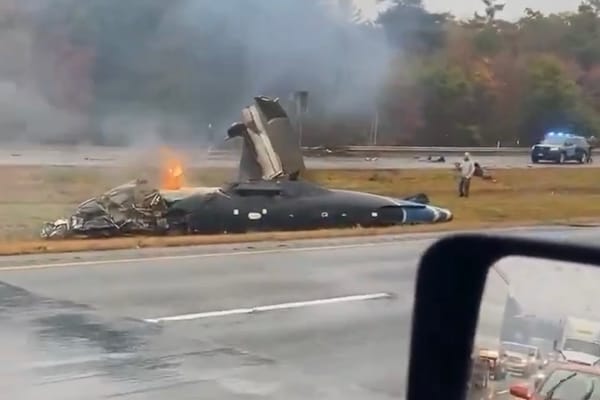
Two Killed After Small Plane Crashes on I-195 in Dartmouth
Dartmouth, MA - A small plane crashed onto I-195 near the Reed Road exit Monday morning, leaving two people dead and shutting down a major stretch of the highway. Emergency crews were alerted shortly after 8 a.m. and arrived to find a Socata TBM 700 aircraft down in the median, with surrounding grass and brush actively burning. Firefighters from Dartmouth and neighboring communities, along with New Bedford Crash Rescue, responded to contain the fire and secure the scene. According to initial r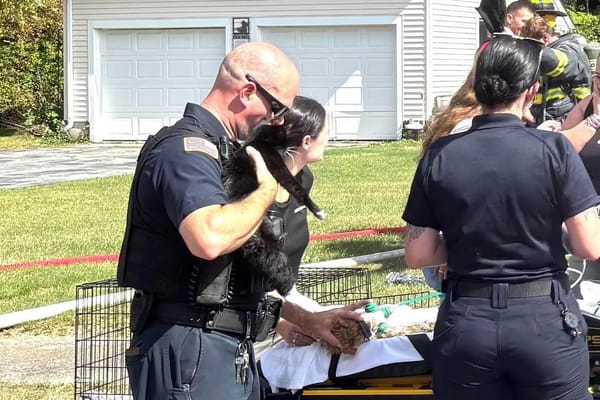
Wrentham Firefighters Rescue Pets From Early Morning House Fire
Wrentham, MA – A fast-moving fire tore through a Wrentham home early Friday morning, leaving the structure heavily damaged and multiple pets in critical condition. Officials said no residents were injured in the blaze, but several animals were trapped inside as heavy smoke filled the home. Firefighters, police officers, and animal control personnel from Wrentham — with support from Norfolk and Plainville crews — worked urgently to bring them out. In total, five cats and three dogs were rescued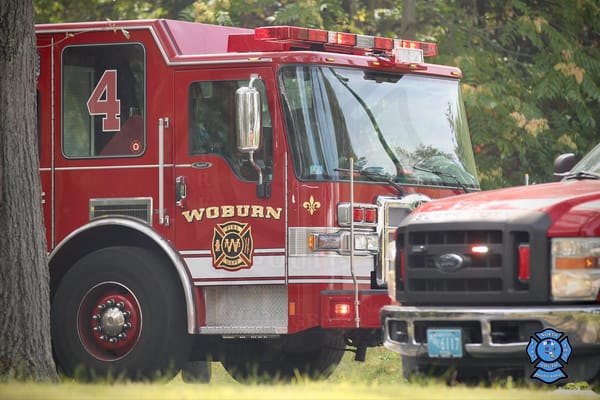
Woburn Firefighters Contain Midday Brush Fire Behind North Warren Avenue
Woburn, MA - Shortly after 12:00 p.m. on Sunday, firefighters from the Woburn Fire Department responded to reports of smoke in the area of 80 North Warren Avenue. Upon arrival, crews discovered an active brush fire burning to the rear of the property. Incident command quickly struck a working fire assignment, summoning additional personnel and equipment to the scene as well as to provide citywide coverage during the operation. Firefighters coordinated their response between North Warren Avenue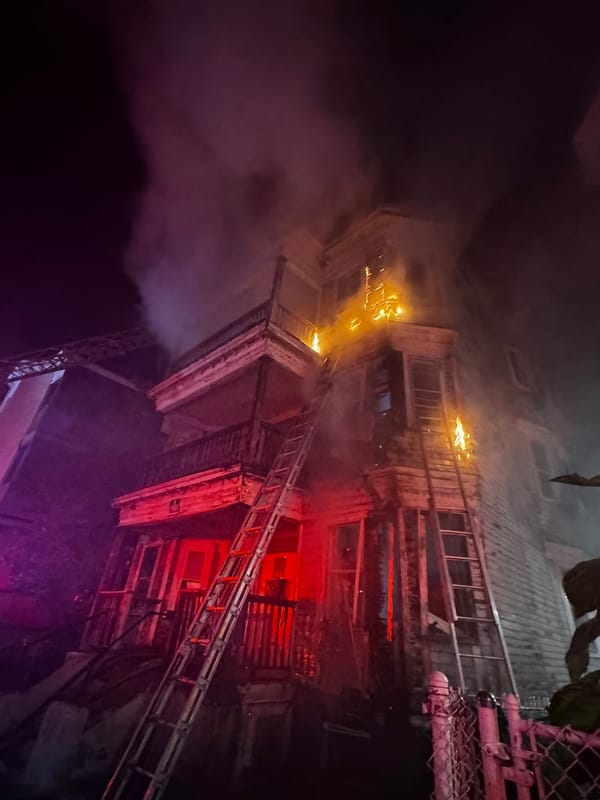
Eleven Displaced After Early Morning Fire on Baird Street in Boston
Boston, MA – In the early hours of Sunday morning, the Boston Fire Department responded to a reported building fire at 39 Baird Street. Firefighters arrived to find heavy fire conditions, which were quickly knocked down through an aggressive interior attack. Crews initiated an extensive overhaul, opening walls on all three floors to ensure that no hidden fire remained. All residents, along with their pets, were safely evacuated from the building. A total of eleven individuals were displaced by